If you’re planning to build a mobile app, one of the first decisions you’ll face is whether to go native or hybrid. It’s a question we hear constantly at MintSpace Technologies, and honestly, there’s no one-size-fits-all answer. The right choice depends on your budget, timeline, target audience, and long-term goals.
As a best mobile app development company, we’ve built both native and hybrid apps for startups and enterprises alike. In this guide, we’ll break down the real differences — no jargon, just practical insights to help you make an informed decision.
What Is Native App Development?
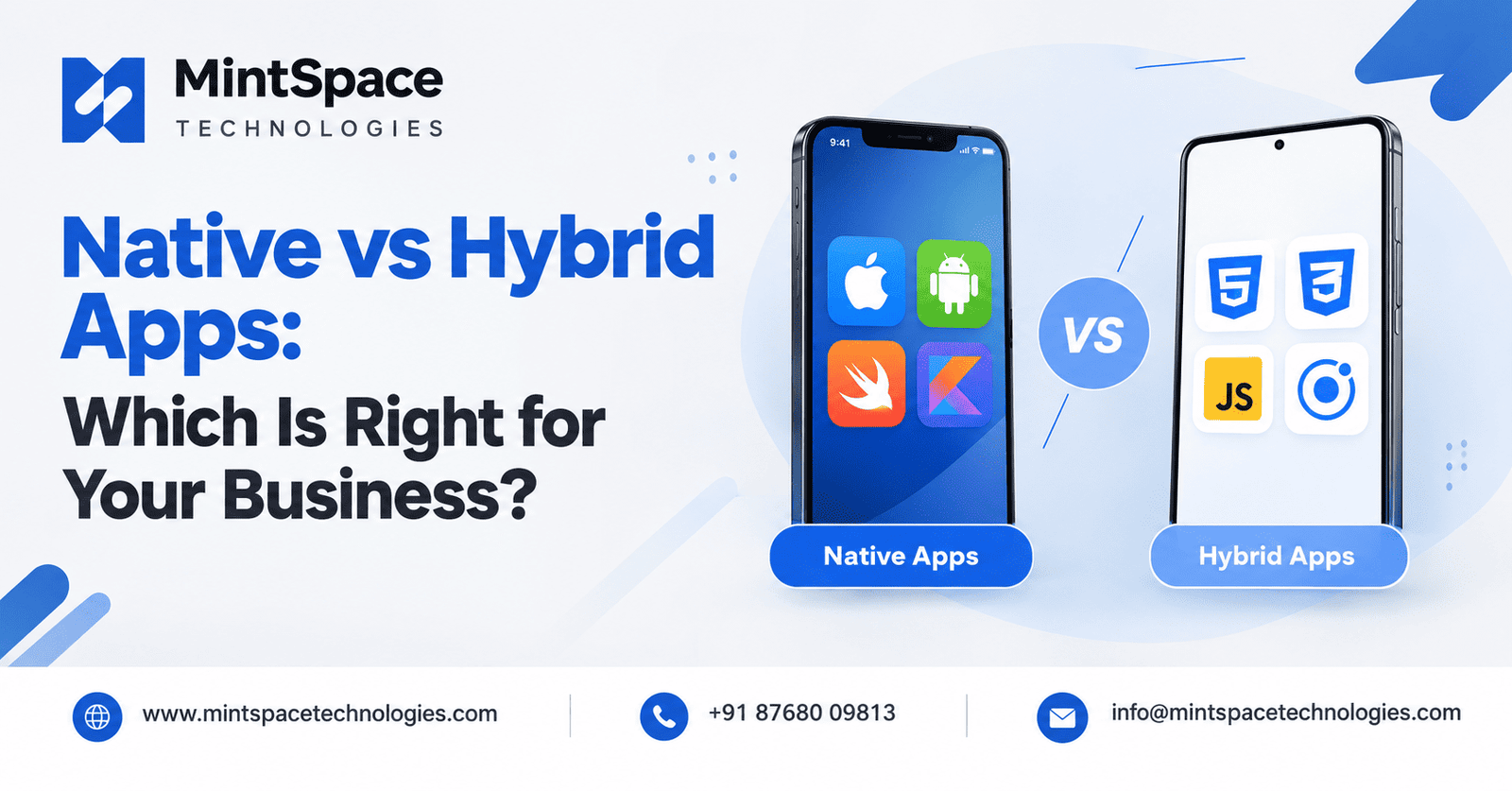
Native apps are built specifically for one platform — either iOS (using Swift) or Android (using Kotlin). Because they’re written in the platform’s own language, they integrate deeply with device hardware like the camera, GPS, and sensors.
Quick answer: Native apps offer the best performance and user experience but require separate codebases for iOS and Android, increasing development time and cost.
Pros of Native Development
- Faster performance and smoother animations
- Full access to device features
- Better security and stability
- Superior user experience, which improves retention
Cons of Native Development
- Higher development cost (two separate builds)
- Longer time to market
- Requires two development teams or skill sets
What Is Hybrid App Development?
Hybrid apps are built using a single codebase (with frameworks like Flutter or React Native) that runs on both iOS and Android. Think of it as writing once and deploying almost everywhere.
Quick answer: Hybrid apps are faster and cheaper to build since one codebase powers both platforms, though they may compromise slightly on performance for graphics-heavy apps.
Pros of Hybrid Development
- Lower development cost
- Faster time to market
- Easier maintenance (one codebase to update)
- Great for MVPs and startups testing an idea
Cons of Hybrid Development
- Slightly lower performance for complex, graphics-intensive apps
- Limited access to some native device features
- May require native “bridges” for advanced functionality
Native vs Hybrid: Key Differences at a Glance
| Factor | Native | Hybrid |
|---|---|---|
| Performance | Excellent | Good |
| Development Cost | Higher | Lower |
| Time to Market | Longer | Faster |
| Maintenance | Two codebases | One codebase |
| Best For | Complex, feature-rich apps | MVPs, startups, simple apps |
Which Approach Fits Your Business?
Choose Native If:
You’re building a feature-heavy app — think fintech, healthcare, or gaming — where performance, security, and seamless hardware integration are non-negotiable. If your budget and timeline allow for a polished, platform-specific experience, native is worth the investment.
Choose Hybrid If:
You’re a startup validating an idea, working with a tighter budget, or need to launch quickly on both platforms simultaneously. Hybrid works well for content apps, e-commerce storefronts, and internal business tools where blazing-fast performance isn’t the top priority.
Why This Decision Matters for Indian Businesses
For startups and SMEs across India’s growing digital economy, budget and speed-to-market often carry as much weight as pure performance. Many Indian businesses start with a hybrid MVP to test demand affordably, then transition to native once the product gains traction and requires more advanced capabilities.
At MintSpace Technologies, our app design and development services are tailored to this reality — we help clients choose the approach that balances cost, quality, and growth potential, rather than pushing a one-size-fits-all solution.
Frequently Asked Questions
Is hybrid app development cheaper than native?
Yes, typically 30-40% cheaper since you build one codebase instead of two separate native apps.
Do hybrid apps perform as well as native apps?
For most business apps (e-commerce, content, utility apps), hybrid performance is nearly indistinguishable. For graphics-intensive apps like games, native still leads.
Can I convert a hybrid app to native later?
Yes, many businesses start hybrid for speed and cost, then rebuild in native once they scale and need advanced performance.
Which is better for a startup MVP?
Hybrid is generally recommended for MVPs due to lower cost and faster launch timelines.
How long does it take to build each type of app?
Hybrid apps typically take 2-4 months for an MVP, while native apps can take 4-6 months per platform depending on complexity.
Final Thoughts
There’s no universally “better” option — only the option that’s better for your business goals. Native offers unmatched performance and experience; hybrid offers speed and affordability.
Still unsure which path fits your project? Talk to the experts at MintSpace Technologies. Our team will assess your requirements and recommend the most cost-effective, scalable approach for your app. Get in touch today for a free consultation.